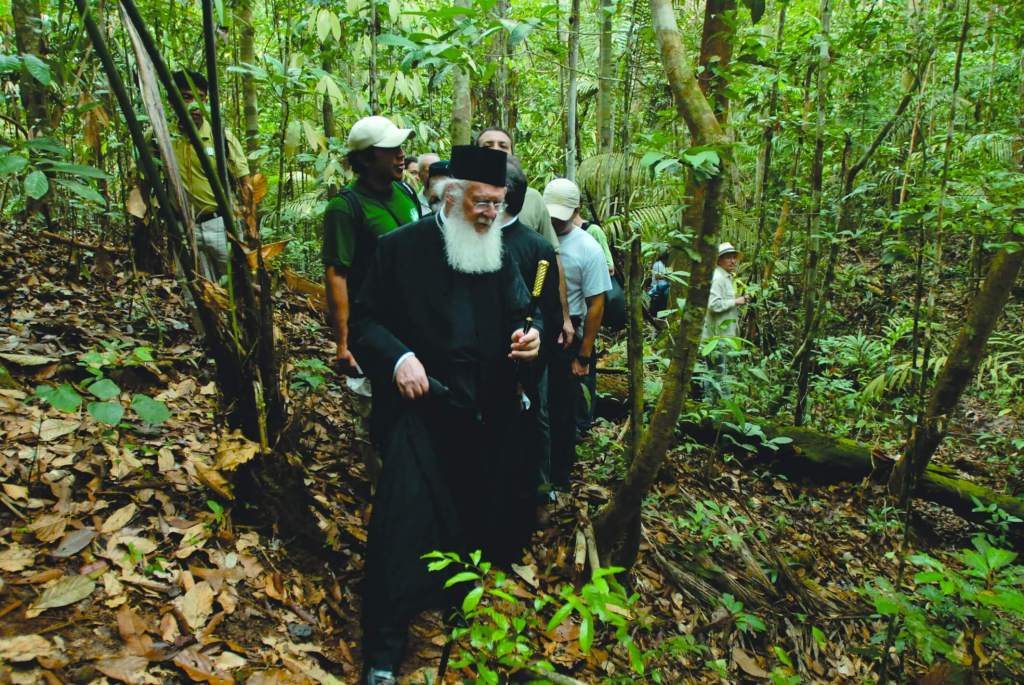
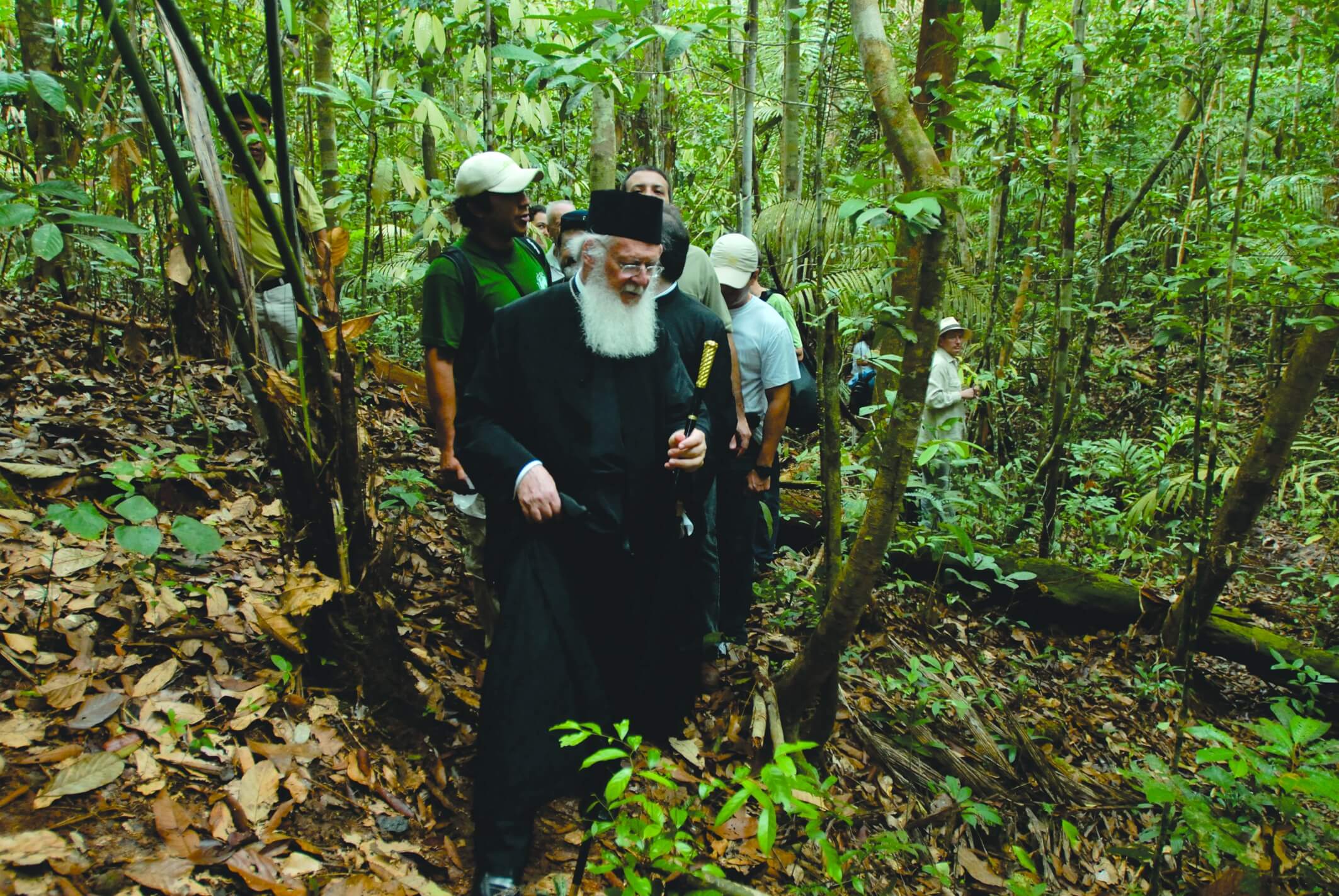
This post is about comments on the natural environment made by His Holiness Patriarch Bartholomew the 270th successor to the Apostle Andrew and spiritual leader of 300 million Orthodox Christians worldwide.
I became an Orthodox Christian in 2000. Prior to this, my understanding of the environment was largely secular and scientific, though I sensed a deeper energy that I came to understand as a creative spiritual force.
Environmentalism and Orthodox Christianity
Last evening I presented some of the ideas of Patriarch Bartholomew to the fellowship group at my church, Saint Gerasimos, in Leichhardt. What drew me to the Patriarch’s commentary was first reading a book written by the Reverend Doctor John Chryssavgis, “Beyond The Shattered Image”.
Rev. Dr. Chryssavgis is an author and theologian who serves as advisor to Patriarch Bartholomew on environmental issues. Focusing on his work requires another post, so for the moment I will focus on what Patriarch Bartholomew has said about the environment.
A useful resource for anyone wanting a more comprehensive overview of the Patriarch’s comments is “Cosmic Grace Humble Prayer: The Ecological Vision of The Green Patriarch Bartholomew“, by Rev. Dr. Chryssavgis.
What follows are the exact words of the Patriarch drawn from this book
Indictus September 1, 1992
“The beginning of the ecclesiastical year, sanctified by the traditional celebration of the Indictus, also constitutes a characteristic juncture in the life of the entire creation that surrounds us.
This juncture is known, at least to those residing in the northern hemisphere of our planet, as the commencement of autumn; to those living in the southern parts of the world, it is known as the beginning of spring.
Thus, autumn and spring, which to the average person usually signify diametrically opposed factors, actually converge and coincide in the inauguration of the ecclesiastical year as one entity established by God
. . . in essence, beginning and end constitute two parts of the same created reality, which is bound to march toward its final destination in both “glory” & “infamy”. Therefore, we should not allow the shape and rhythm of the present world to frighten us.
. . . “summer” and “winter”, “light” and “darkness”, “greatness” and “smallness”, “instant” and “eternal”, “material “and “spiritual”, “divine” and “human” are proven not to be contrary to each other, but rather to be deeply correlated. For the redeeming will of the benevolent God, who is beyond all things, is realised gradually in time and space through all of these things.
. . . humanity has been called to assume the task of being primarily a partaker and a sharer in the responsibility for everything in the created world. Endowed, therefore, from the beginning with “the image of God” humanity is called to continual self-transcendence so that, in responsible synergy with God the creator, each person might sanctify the entire world, thus becoming a faithful “minister” and “steward.”
. . . being God’s minister and steward over all creation does not mean that humanity simply prospers or is happy in the world. This would be crude self -sufficiency and impious minimalism. The main lasting benefit of these qualifications is that, by using the world in a pious manner, humanity experiences the blessed evolution from the stage of image to that of “divine likeness”. In similar fashion, every other good element of the universe is transformed, by the grace of God and even without human intervention, from the stage of “potentiality” to that of “actuality,” in fulfilment of the pre-eternal plan of the entire divine economy.
Indictus September 1, 1995
The Fathers of the Church in a manner fitting to God . . . taught that every species was created before humankind in order for humankind to enter into a full kingdom and take action as king, priest, and teacher.
He continued:
. . . invoking enlightenment from above upon all women and men to live and act toward all creation in a God-loving way, having common salvation as our final aim, we pray for peace and undisturbed goodwill over all the earth.
Environmenta Symposium Saint Barbara Orthodox Church 1997
Indictus September 1, 2026
We are convinced that highlighting the religious and ethical dimensions of the ecological threat will lead to an awareness of the pivotal importance of “ecological responsibility.” Humanity must at last cease acting as though it does not know and definitively cast aside the illusion that planet Earth can in perpetuity withstand the burdens and destruction caused by human activity, or that nature has the power to renew itself of its own accord.
The ethos of responsibility for the protection of the natural environment must find expression at the global, national, local, and personal levels. We reiterate once again that the cultivation of ecological responsibility is a “categorical imperative” for humanity as it confronts the greatest threat it has ever been called to face throughout the entire course of its history.
It is abundantly clear that, so long as the dominant anthropological model is represented by the “foolish rich man” of the Gospel (Luke 12:17–21), with his declaration, “I will pull down my barns and build greater; and there I will store all my crops and my goods,” and his words, “Soul, you have many goods laid up for many years; take your ease, eat, drink, and be merry,” humanity will continue to undermine its future and annihilate its own “home.”
The “sins of modernity” have created—and continue to create—new divisions and ruptures between humanity and nature. The contemporary “man-god” persists in geocide, disregarding every measure and limit in the name of geopolitical designs and economic interests, of consumerism and of the satisfaction of essentially insatiable needs, but also, on a deeper level, because of an overturning of inner lived experience and values. The consequences of the global dominance of the desire to manipulate, instrumentalise, and exploit nature will prove to be tragic for life on our planet.
Respect for the core pillars of ecological civilization can restrain environmentally destructive tendencies and open the “sole ecological path,” that of sustainable development. More broadly, humanity needs to reach agreement upon a body of common fundamental values which, in a world marked by conflict and polarization, will serve as a compass for the journey towards the future.
We regard the principle of solidarity as the central axis of this body of values: solidarity as a source of shared responsibility, dialogue, and sincere reciprocity, together with collective responsibility for the protection of the natural environment.
Respect in practice for the sacredness of the human person and care for the integrity of creation are, from a Christian perspective, vital manifestations of the eucharistic realisation of the Church and of human being’s call to become the “priest” of creation.
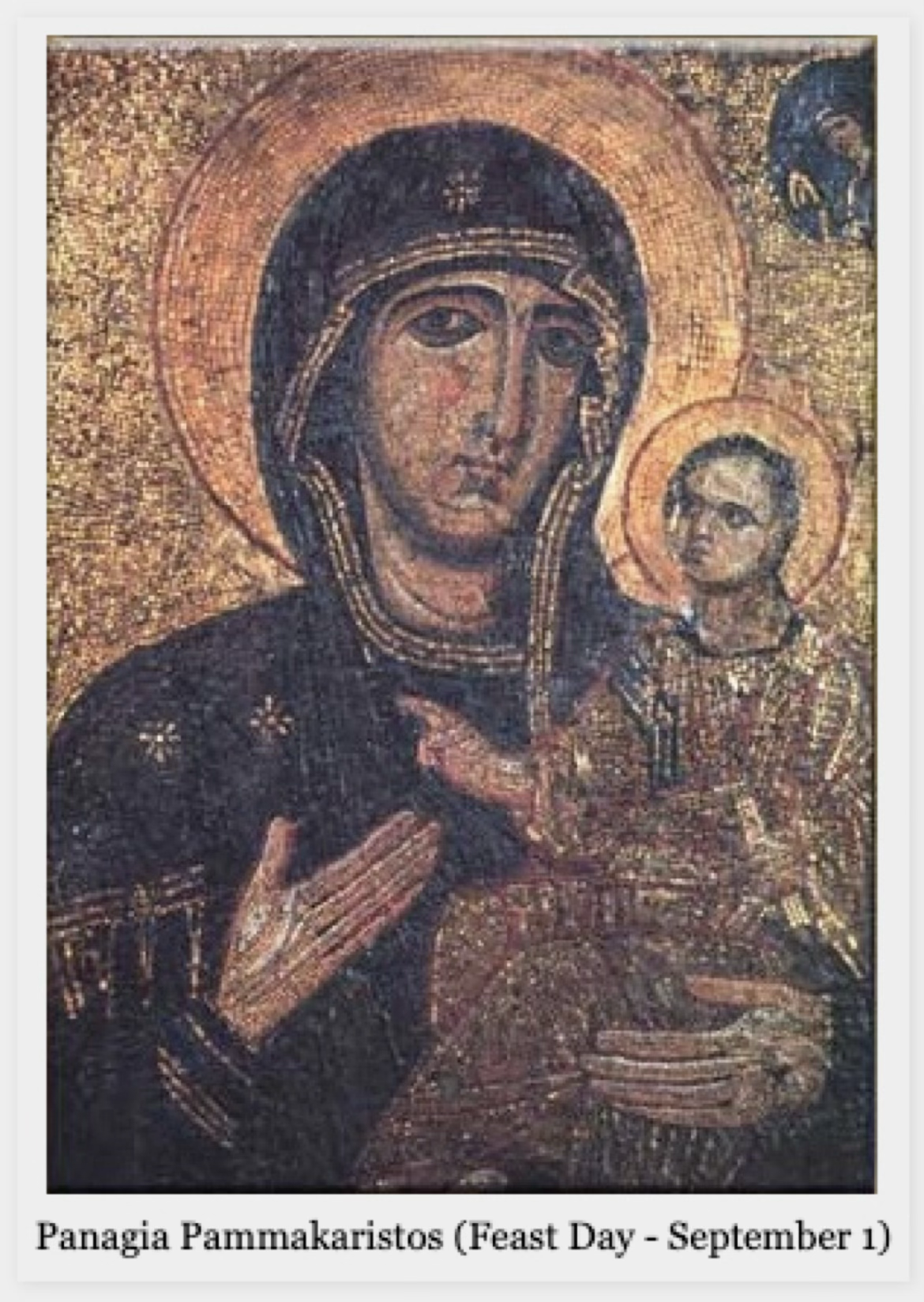
In this spirit, as we pray that the new ecclesiastical year may be favourable and fruitful in works that are good and pleasing to God, we invoke upon all of you, through the intercessions and mediation of the Most-Holy Theotokos Pammakaristos—whose most sacred icon we reverently keep in the Venerable Patriarchal Church and embrace “with mouth and heart and will”—the grace and mercy of our Lord and God and Saviour Jesus Christ, Whose All-Holy Name be blessed and glorified, now and ever, and unto the endless ages. Amen!



Leave a Reply