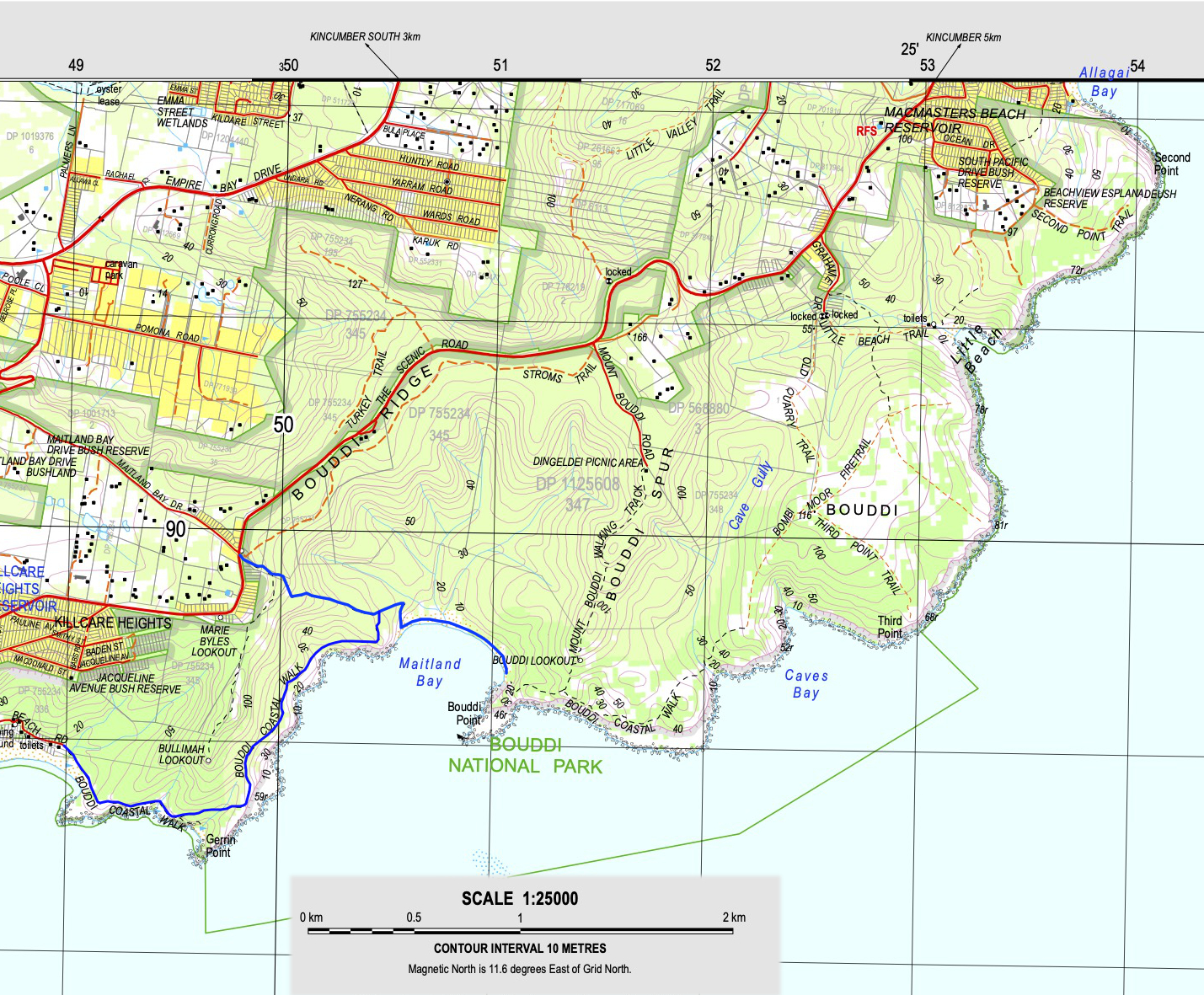
Yesterday I joined my son and a friend to complete a beautiful coastal walk through the Bouddi National Park. Beginning from the Maitland Bay Information Centre on The Scenic Road at Bouddi Ridge, we followed the Maitland Bay Track. A well-made all-weather path descends to the bay below. Our destination was the northern end of Putty Beach.
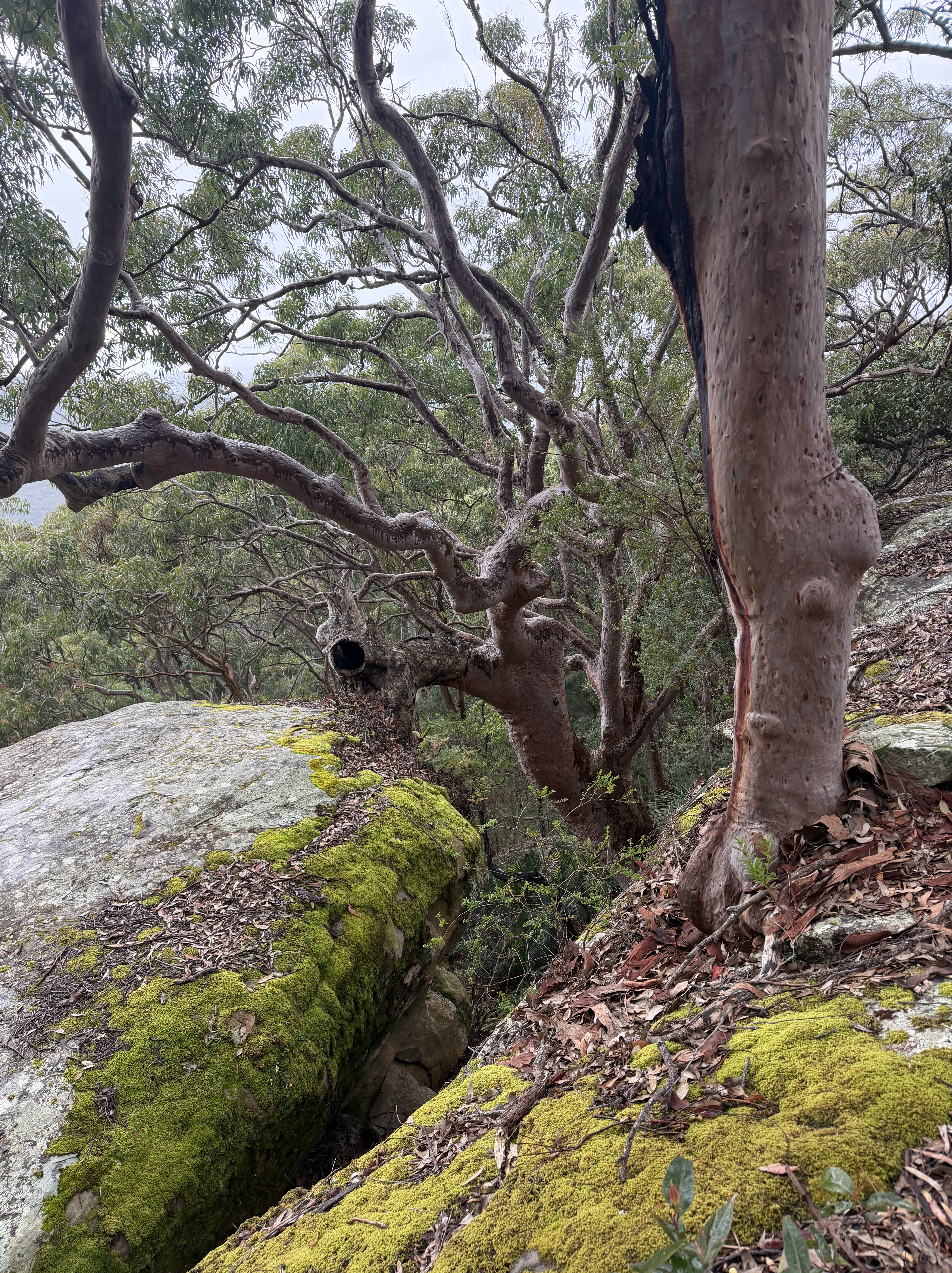
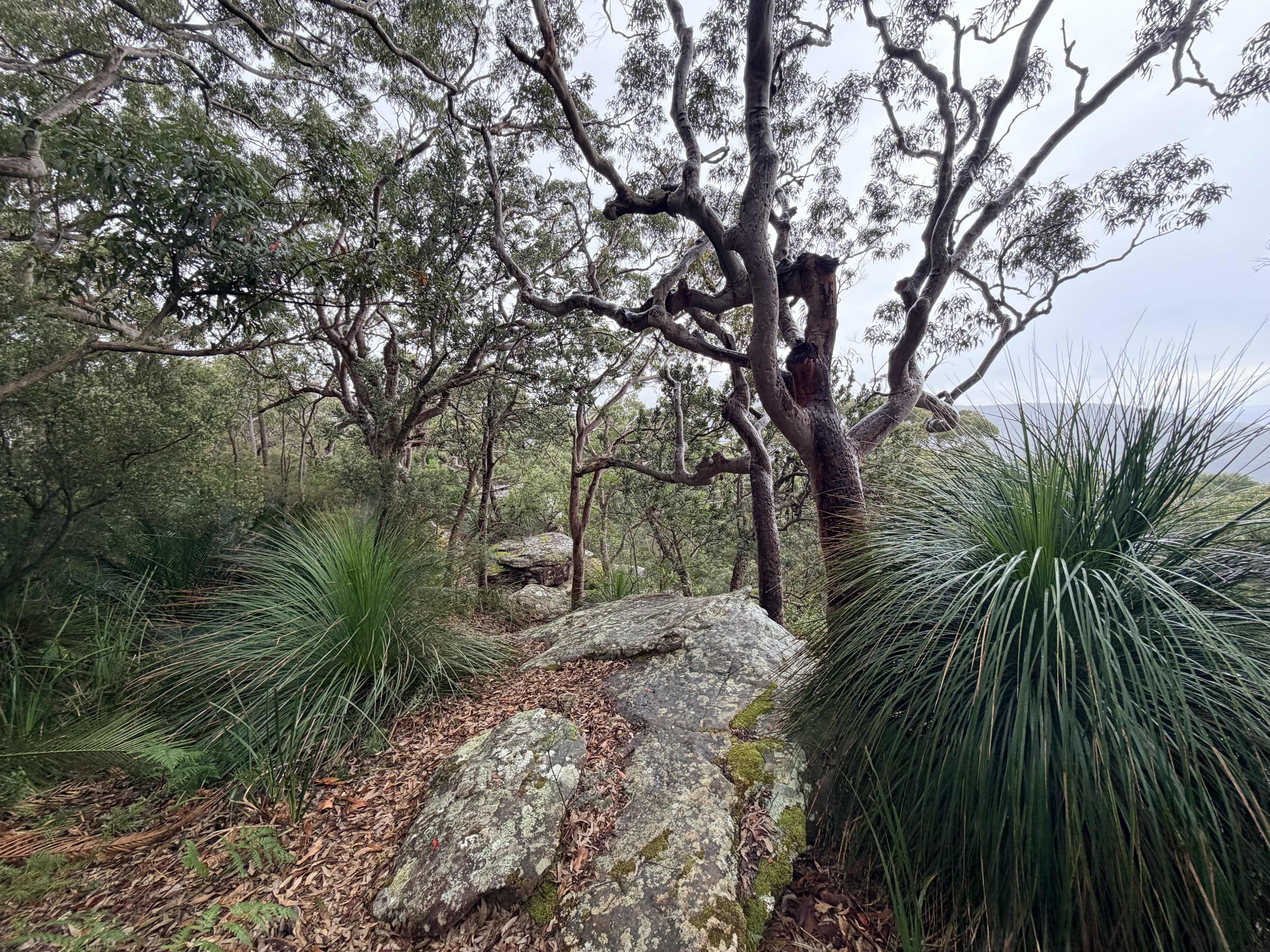
The first clear view of Maitland Bay was beside an iconic twisted red gum and split rock sandstone boulders.
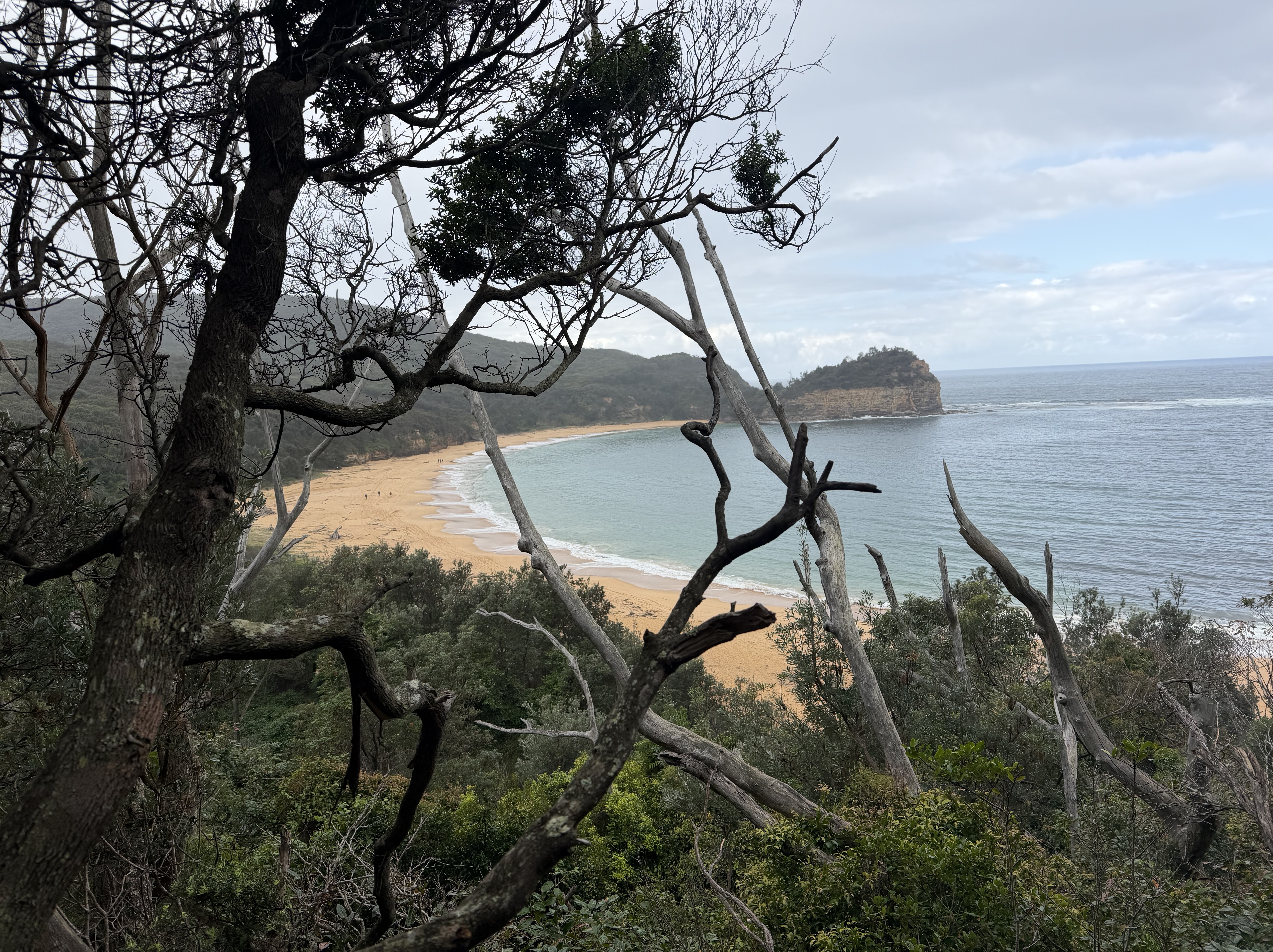
The views and rock formations are beautiful. Wet sclerophyll vegetation predominates, transitioning into temperate rainforest and within some of the small gullies.
As the trail drops below the Bouddi Ridge the predominant rocks transition from Hawkesbury sandstones to the upper layers of the Narrabeen Group.
Moving down the track we noticed a canopy dominated by open eucalypt forest. Here the predominant trees were:
- Sydney Peppermint (Eucalyptus piperita),
- Grey Gum (Eucalyptus punctata),
- White Mahogany (Eucalyptus umbra), and
- Turpentine (Syncarpia glomulifera).
Most impressive were the large and twisted Smooth-barked Apple. These aren’t eucalypts but Angophora Apple /Angophora (Angophora costata), and often called Red Gum.
The understorey had various hard leafed shrubs including.
- Heath Banksia (Banksia ericifolia),
- Hairpin Banksia (Banksia spinulosa),
- Willow-leaved Crowea (Crowea saligna),
- Pink Waxflower (Eriostemon australasius), and
- Rough-fruited Pittosporum (Pittosporum revolutum).
There were also some grass trees (Xanthorrhoes latifolia) in the sunnier spots.
In the wetter gullies there were pale fruited Lilly Pilly. The plant belongs to the same family as cloves, Myrtaceae, and share the same genus, Syzygium. Usually, in eastern Australia the Lilly Pilly I’ve encountered bore pinkish to red fruit with a sweet taste. It makes excellent jam. When we tasted the Lilly Pilly fruits, we found along the track they were rather bland. I concluded that the sandy soil they were growing in was low in nutrients and did not support the growth of sugary fruit.
Further along the track and more flavoursome, was Sarsaparilla (Smilax glyciphylla.), also known as sweet sarsaparilla. In the past, certainly in the early days of European settlement, it was used as a tea substitute and with leaves containing the glycoside glyciphyllin used as a medicinal tonic.
In places there were also beautiful Common species include the prehistoric-looking Burrawang (Macrozamia communis), though not fruiting.
Further down the hillside, particularly in the gullies where the Narrabeen Group of rocks began to appear, shale based richer, moisture-retaining soils, were apparent and here there were some Bangalow Palms (Archontophoenix cunninghamiana).
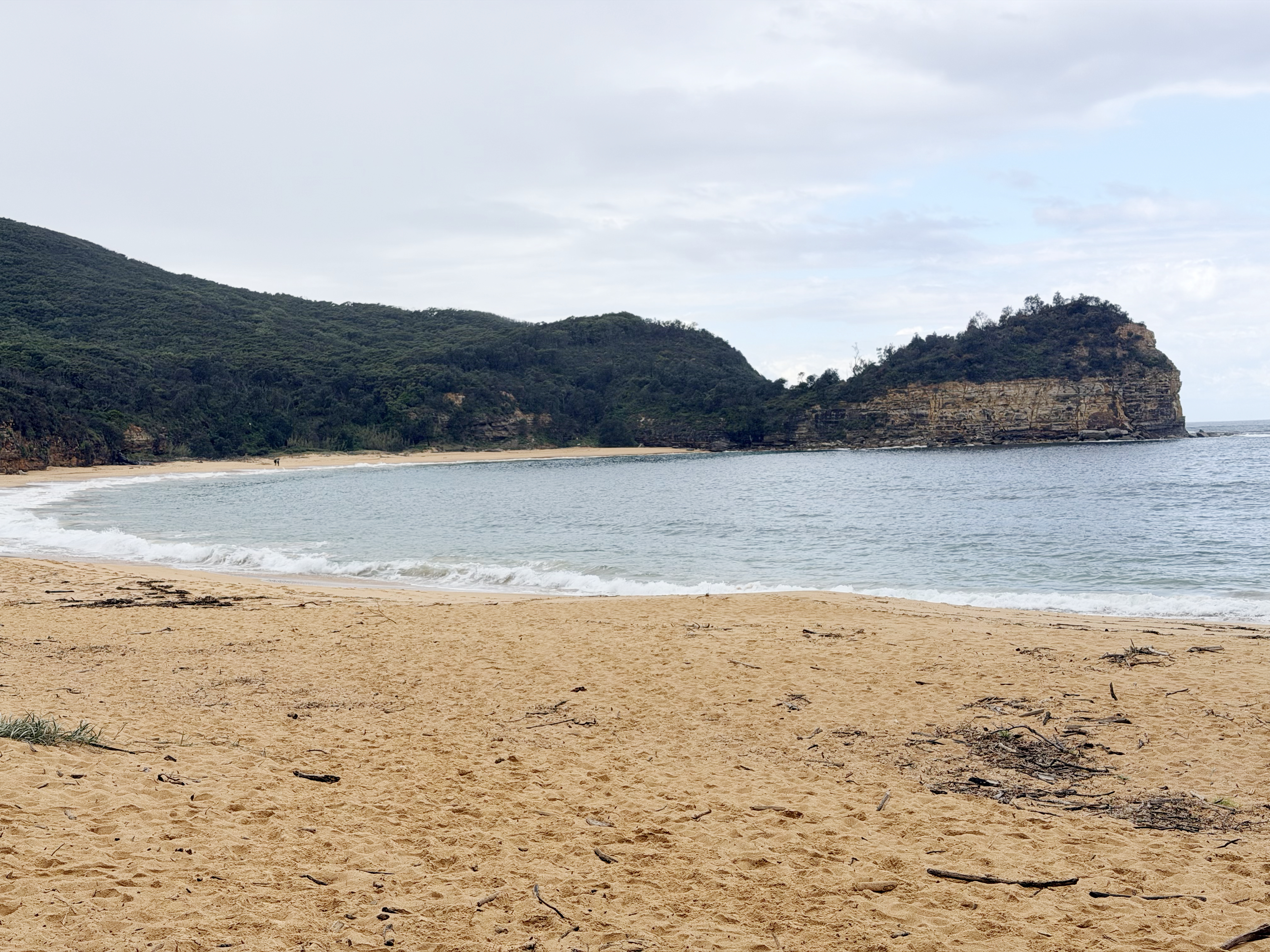
Stepping down onto the sand at Maitland Bay we walked on to the northern end and then headed back retracing our steps for about 300 metres where we entered the Bouddi Coastal walk.
The Bouddi Coastal Walk
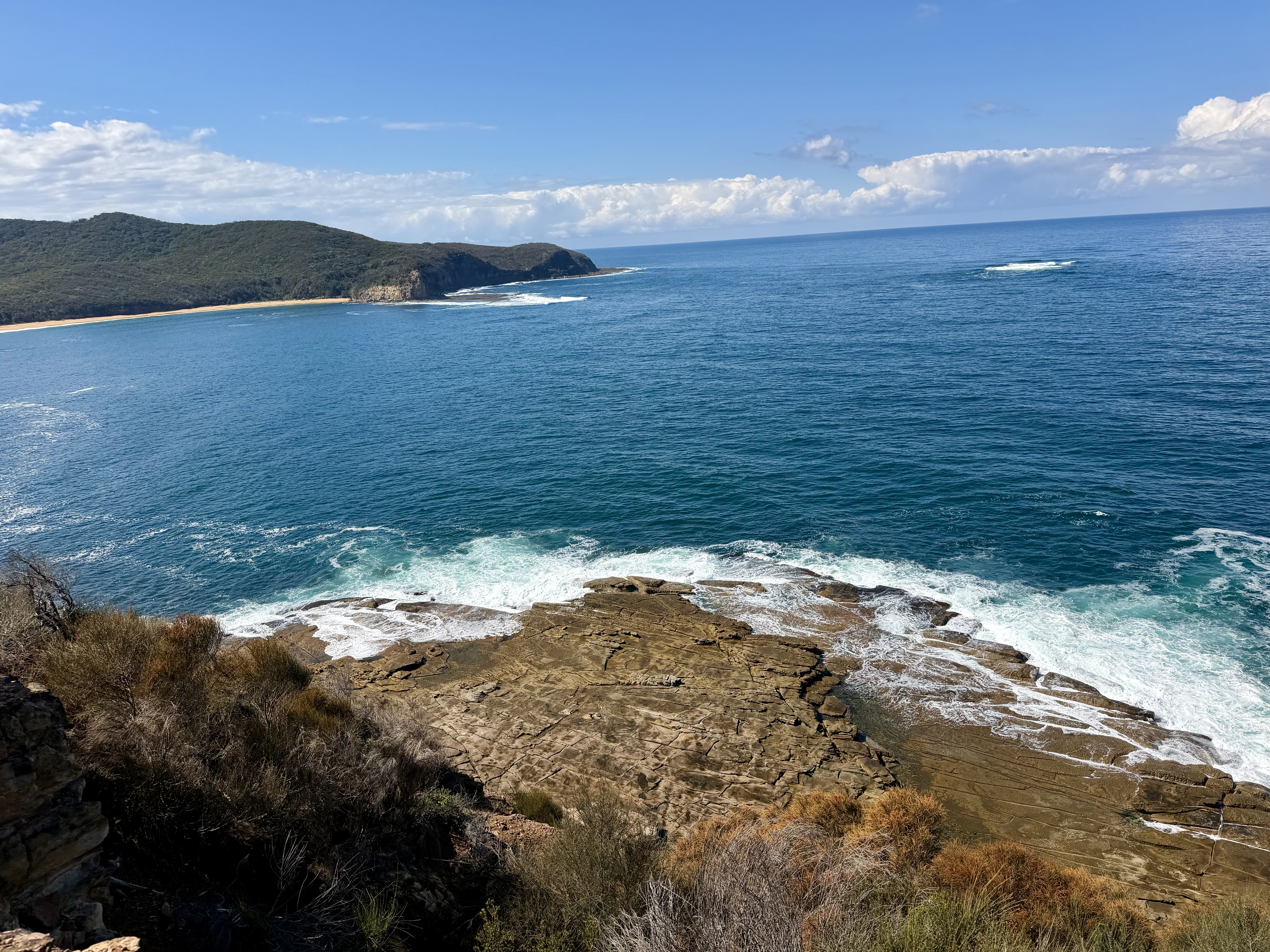
This part of our walk traversed a stunning scenic stretch of coastline. The photographs speak for themselves, so I’ll keep the commentary to a minimum.
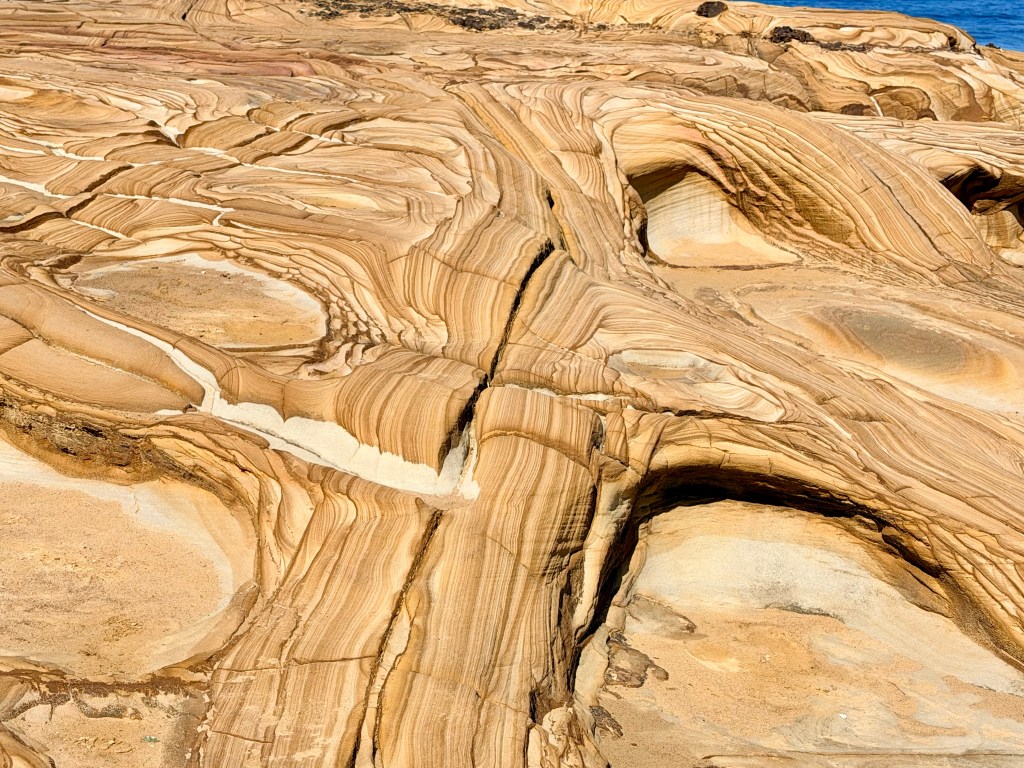
The trail progressed through an area that was predominantly Hawkesbury sandstone. This stone is a from the Triassic era sits directly on top of the older Narrabeen group. Both groups exist across this Bouddi peninsula resulting in highly distinctive stretch of coastline.
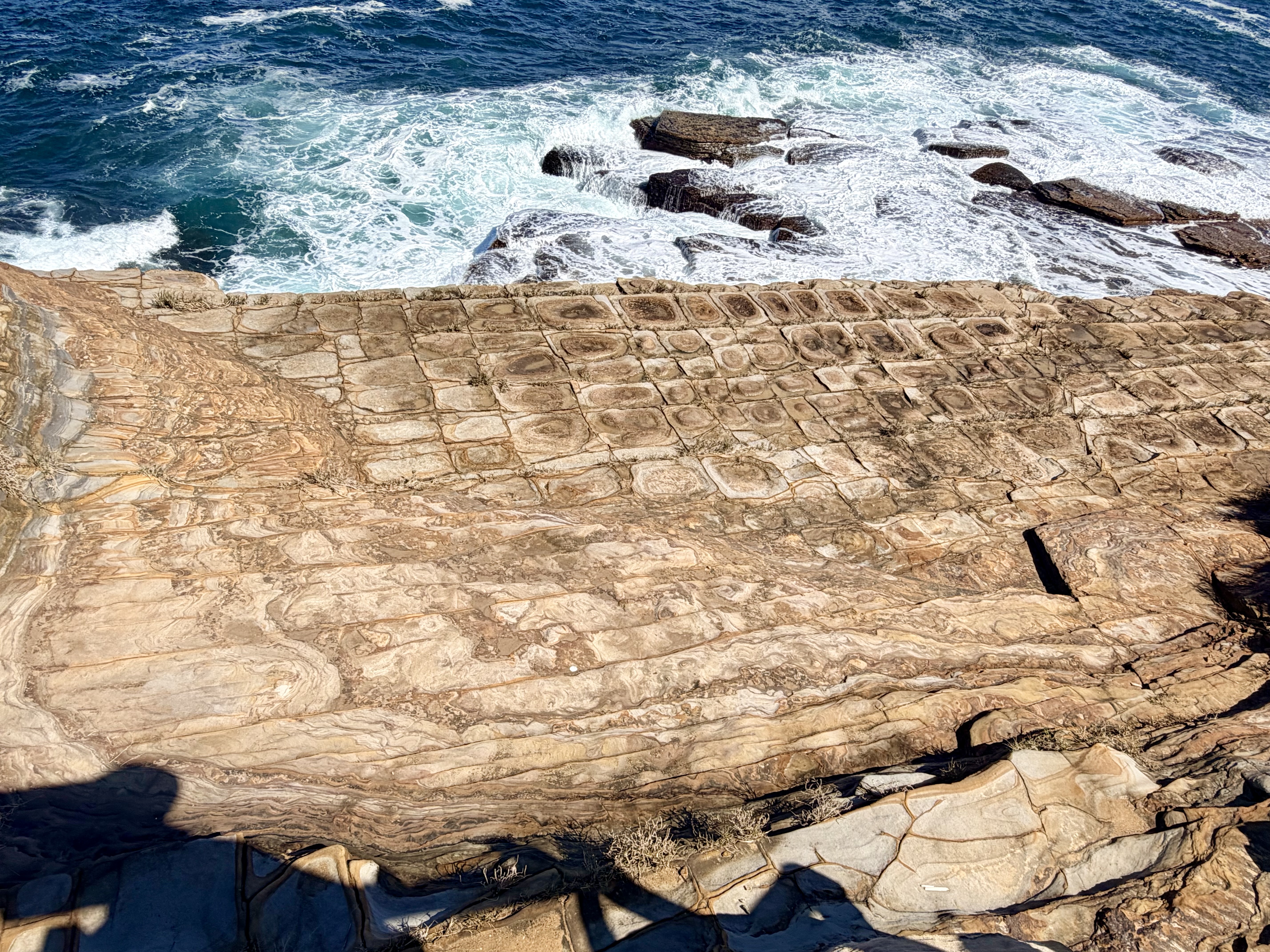
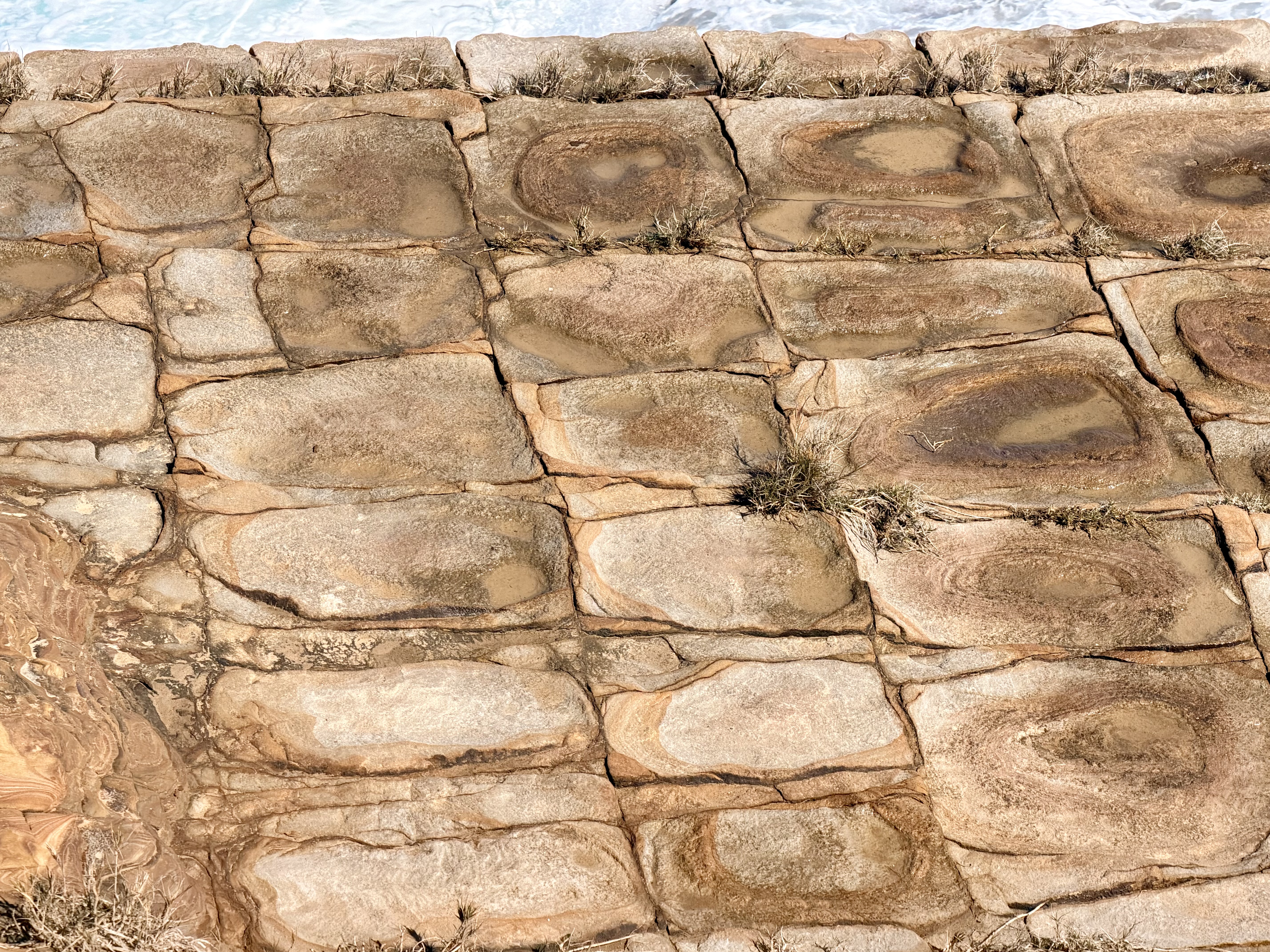
Below on the rock platforms which on research I’ve discovered are also Hawkesbury series were large often irregular tessellations the result of tonic stress fractures in the Hawkesbury sandstone.
Beside the trail are stretches of intricately banded Hawkesbury sandstone with what’s known as Liesegang rings. They’re created as iron oxides leach and concentrate within the porous matrix of the Hawkesbury layer.
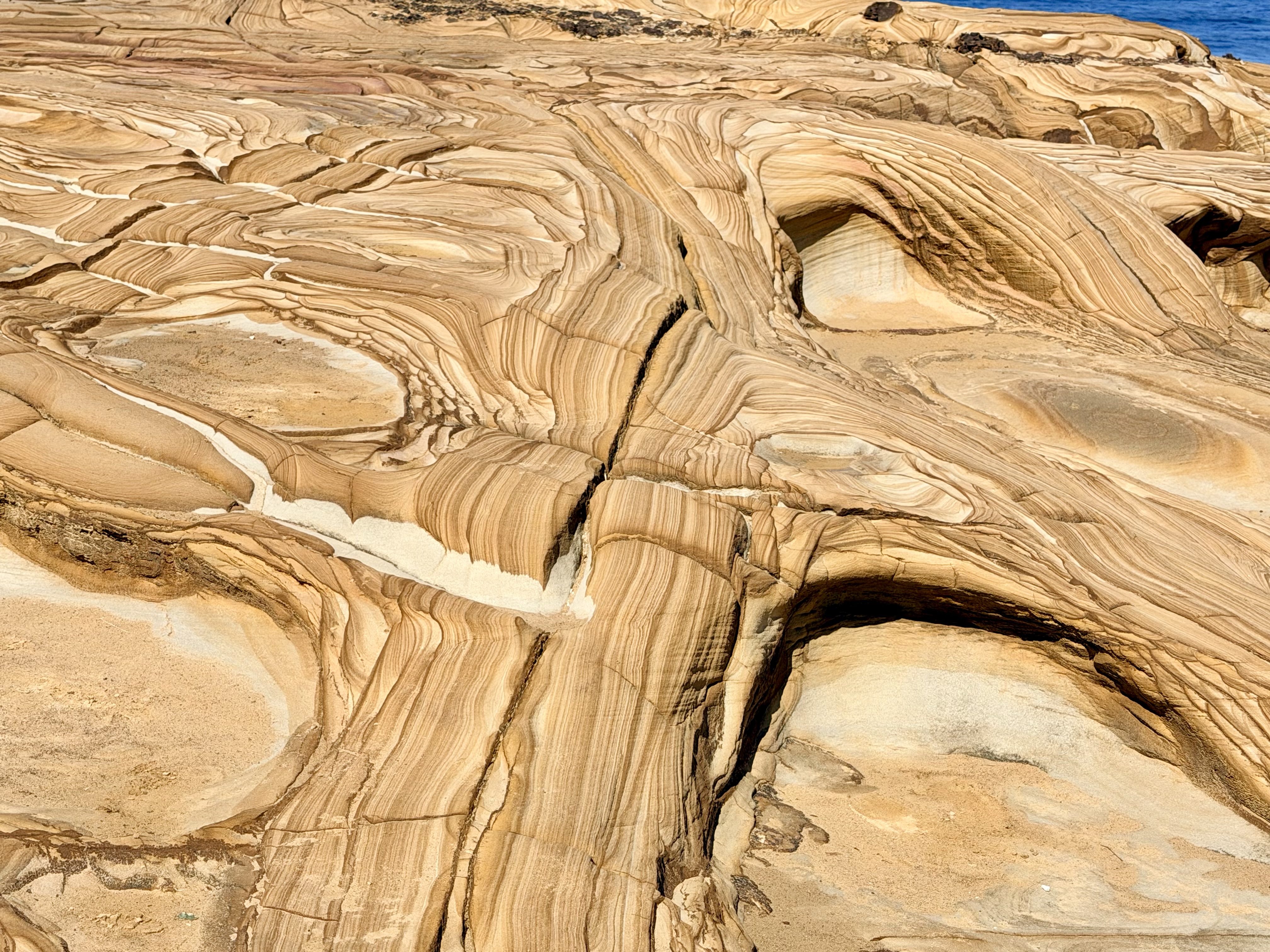
Futrther on we encountered some much finer tessellated pavements.
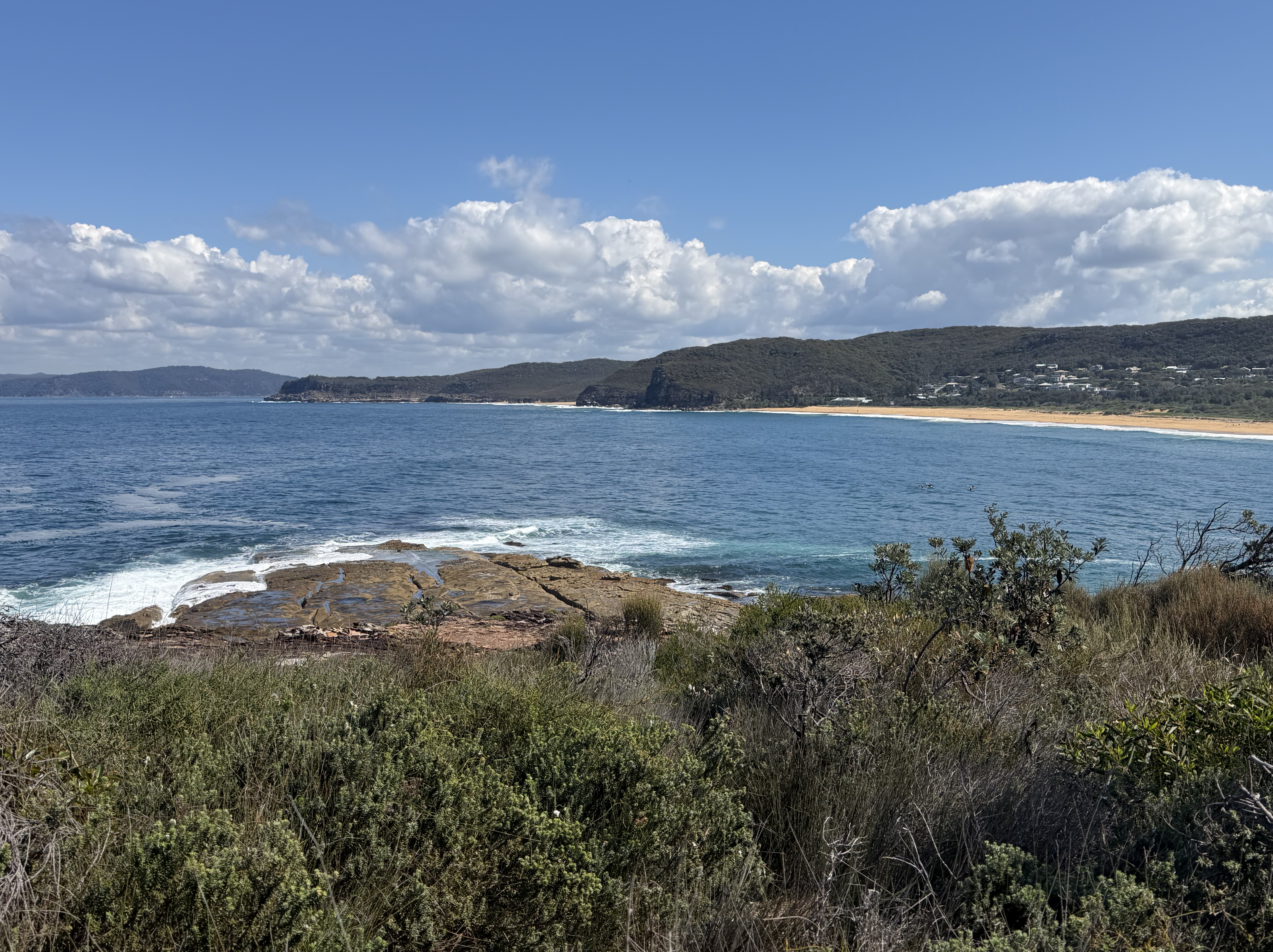
Finally we rounded the headland and saw Putty Beach, Kilcare in the distance.





Leave a Reply