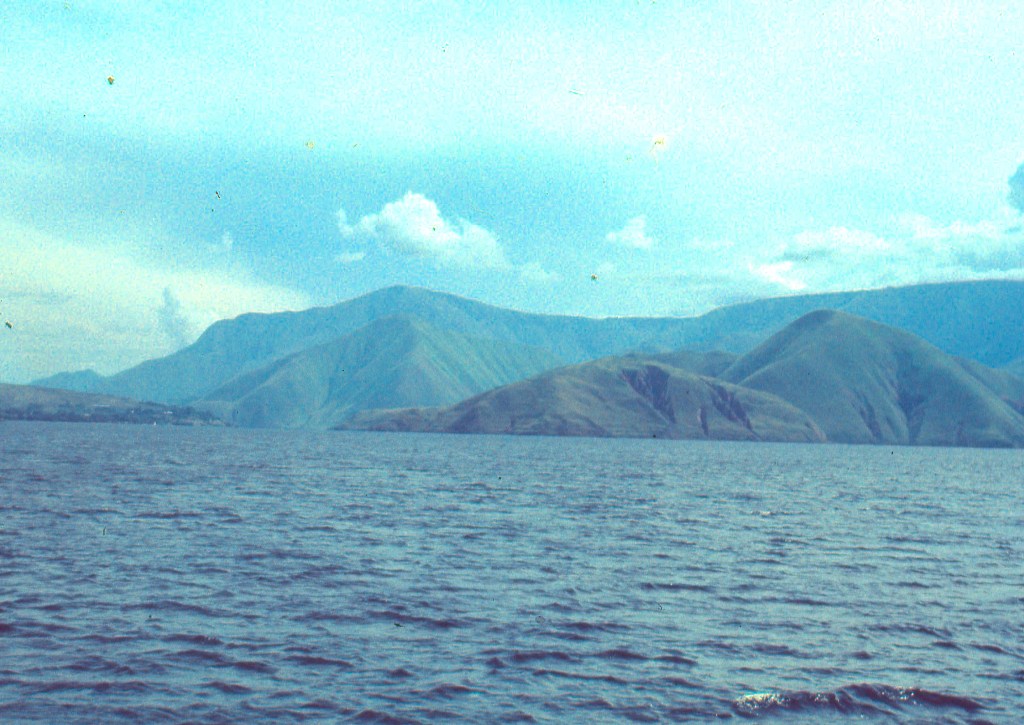
Mount Toba, on the island of Sumatra, erupted somewhere about 75,000 ago it produced 1000 cubic km of tephra in the first nine days of its eruption, and over the course of this eruptive phase ejecting a total of from 2500-3000 km3.
“This, the last eruption, had an estimated volcanic explosivity index of 8, making it the largest known explosive volcanic eruption in the Quaternary, and one of the largest known explosive eruptions in the Earth’s history.”
Ash from the eruption covered an area of at least 4 million square kilometres. The ash fall affect areas in India and South Africa. With such a vast amout of ash particles in the atmosphere the Pleistocene Ice Age began, Sea levels fell.
Now only a large lake remains where the volcano once stood.
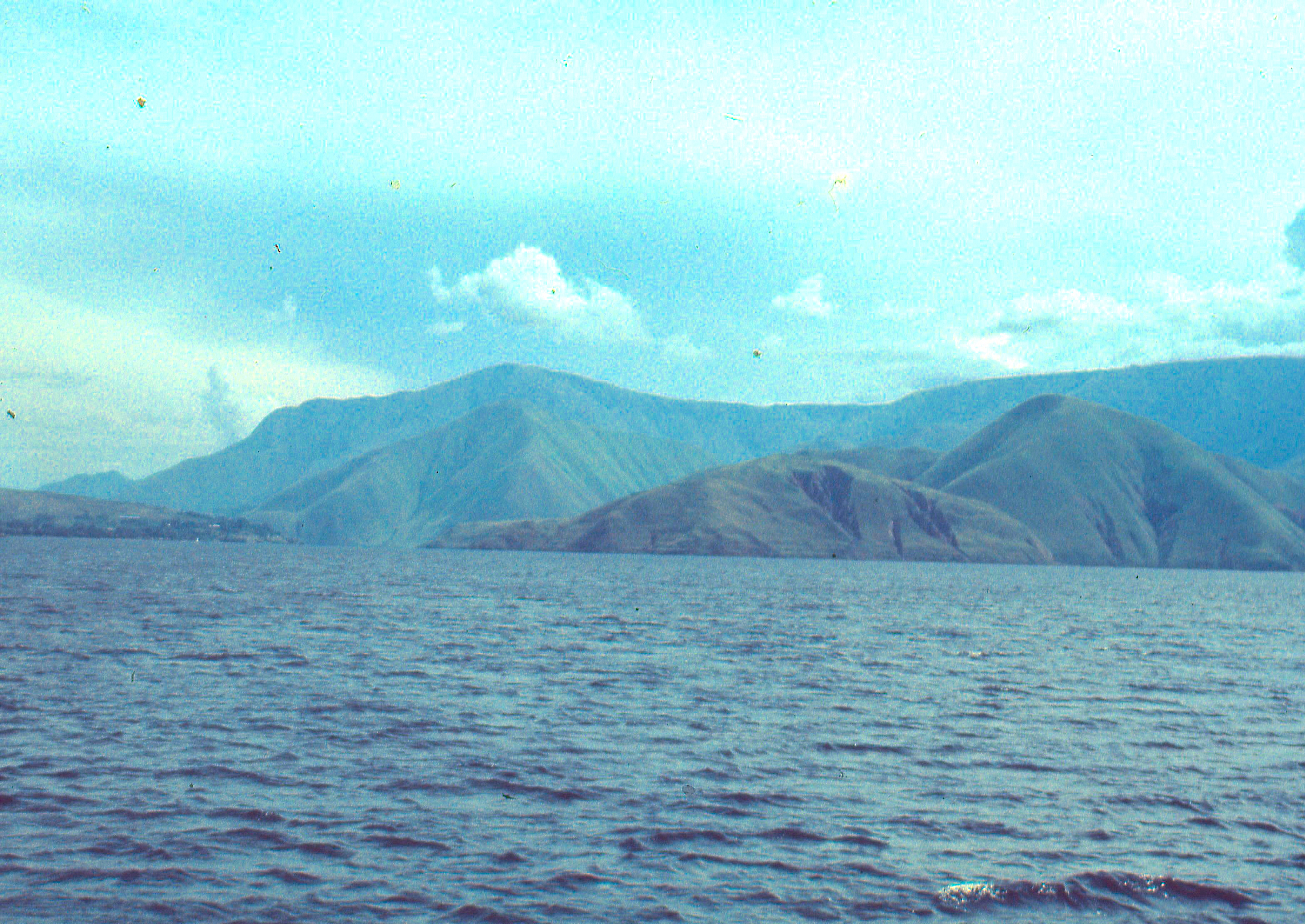
It is most likely that humans were already in Sahul before Toba eruption, and the eruption’s impact on climate fallout would have directly affected indigenous populations across the continent. Perhaps the Australian continent might have proved a safe haven. Certainly sea levels remained lower than present sea levels until some 10,000 years ago making movement of people to the east and south easier than before the eruption.
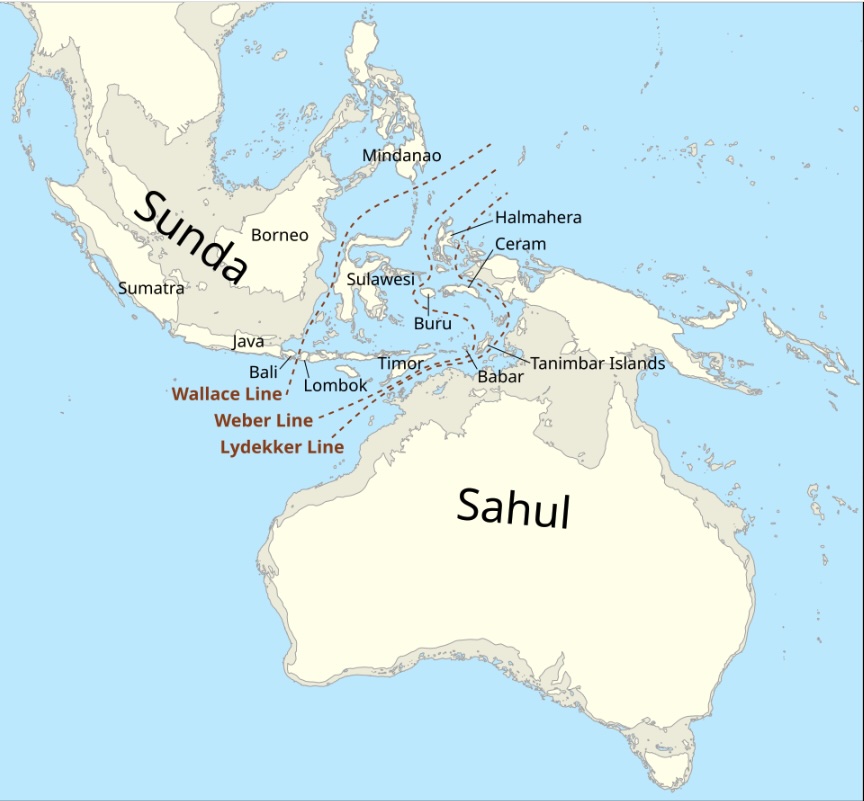
The mape shows the 125m depth contour though sea levels actually fell as much as 150 metres. Lower sea levels enable easier migration of people from the west and north.
Massive deposits of volcanic ash covered vast tracts of land inhibiting land movement so the Australian continent was an obvious destination.
The eruption disrupted the pathway through Sunda and Sahul that humans would eventually take.
The Madjedbebe rock shelter
Archaeological excavations at the Madjedbebe rock shelter in Northern Arnhem Land indicate Aboriginal peoples have inhabited Australia for at least 65,000 years, based on 10,000 discovered artefacts.
The Knowledge Holders are the Gundjeihmi Aboriginal Corporation
The site reveals the world’s earliest known evidence of seed grinding, pigment processing (including micaceous pigment), and the use of edge-ground hatchets.
Stone tools, grinding stones, ground ochres, and ochre crayons, recovered from the site reveal early advanced capabilities in food processing, toolmaking, and artistic expression.
Connections with Nusantara
While Indigenous contacts between the Australian continent and the lands to the north of Australia date from at least 65,000 years before the present, a more recent period of trade, cultural and linguistic exchange highlights the contacts with Nusantara prior to British settlement in Australia.
The word Indonesia is a relatively recent term, long before it was adopted the archipelago to the north of Australia was called Nusantara or islands between, indicating a long awareness of both mainland Asia and the Australian continent.
From as early as 1650 up until 1907, Indonesian fishermen from Makassar and Bugis areas, of Sulawesi regularly visited Arnhem Land which they called Marege. Here with the aid of Indigenous Australians they harvested sea cucumbers (trepang or beche-de-mer) which were smoked and then shipped first to Ujung Pandang in Sulawesi and then on to markets in China. In return for harvesting the trepang the people of northern Australia received trade goods such as
Thwe Makassans and Bugis did sailed in fleet of boats numbering from 30 to 60 boats. Each craft contained up to 30 people. Their journeys were timed so that they would arrive on the north coast of Australia in December, the beginning of the wet season. They returned home in March or April, the end of the rainy season. The sea cucumber fishermen constructed temporary houses, dug wells and planted tamarind trees. The small areas of tamarind trees still exist .
Many Aboriginal people who worked for the sea cucumber fishermen, studied their language, developed the habit of smoking tobacco, created pictures of boats, acquired some elements of the visitor’s dances and ‘borrowed’ some of the stories they tell. A painting of a boat made by Aboriginal people can be seen in Figure 4.3; The image was taken from Groote Elandyt.
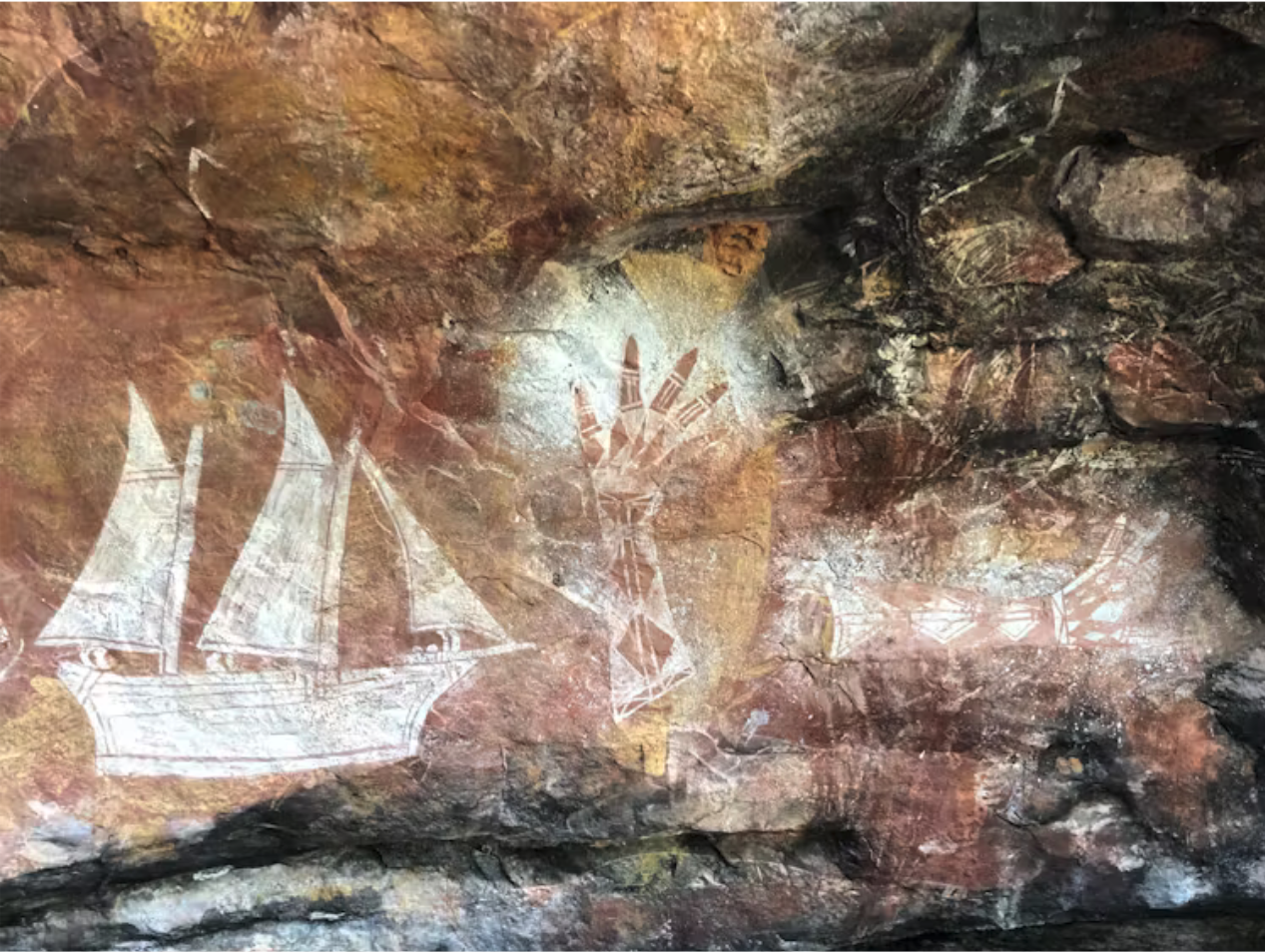
Photo by Ian Moffat
Some Aboriginal people sailed with the fishermen on their way home to Sulawesi, and returned to Australia in the following monsoon season, and some in among them remained in Sulawesi.
- Iron axes, knives, metal blades, and fishhooks
- Textiles
- Arak and tamarind
- Pottery and Glassware
Though the Macassans never permanently settled in the region, their visits significantly influenced the culture and rituals of people such as the Yolŋu. Other groups also had contact with the Macassans and Bugis.
Some Macassan, Bugis and Melayu words are found in the Aboriginal languages of northern Australia. For example these words are found in Enindiljaugwa, the language of the Wanindiljaugwa people of Groote Elyandt, in the Gulf of Carpentaria.
- ajira air Melayu
- Balanda Belanda Melayu
- bara barat Melayu
- bula buluh Makassan
- jara jara Melayu
- libaliba lepa-lepa Makassan and Bugis
- rupiah uang Melayu
- Umbakumba ombak-ombak Malayu
Melayu was used widely from Nusantara out into the South West Pacific
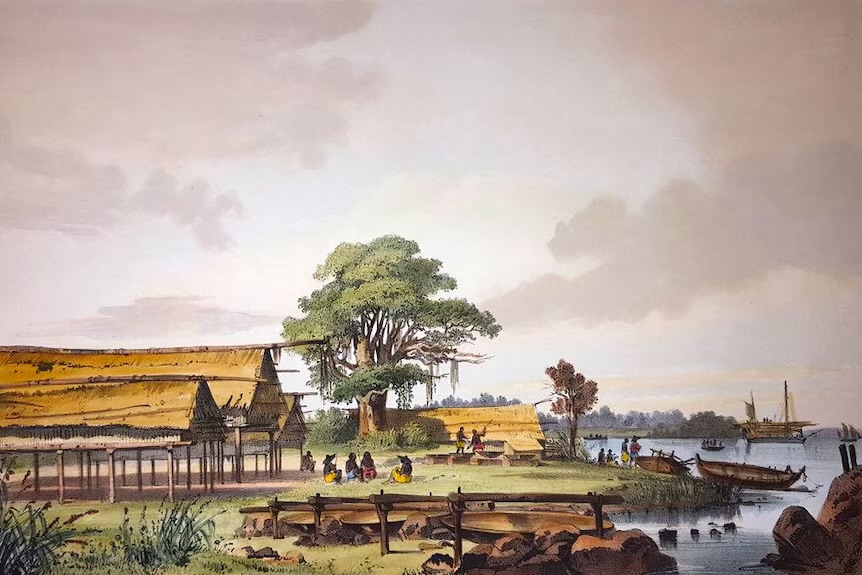
Kayu Jawa
Kayu Jawa (or Kai Jawa) was the Makassan name for the fishing grounds along the Kimberley coast of Western Australia. These grounds are likely to have extended from Napier Broome Bay as far south as Cape Leveque. It is possible that Kayu Jawa referred to Sandal Wood. There is an indigenous variety, Santalum spicatum, native the Western Australia.
National Museum of Australia
For more on the Trepang trade visit the Museum’s website, or watch this video by researcher Campbell McNight



Leave a Reply