Harnessing the Power
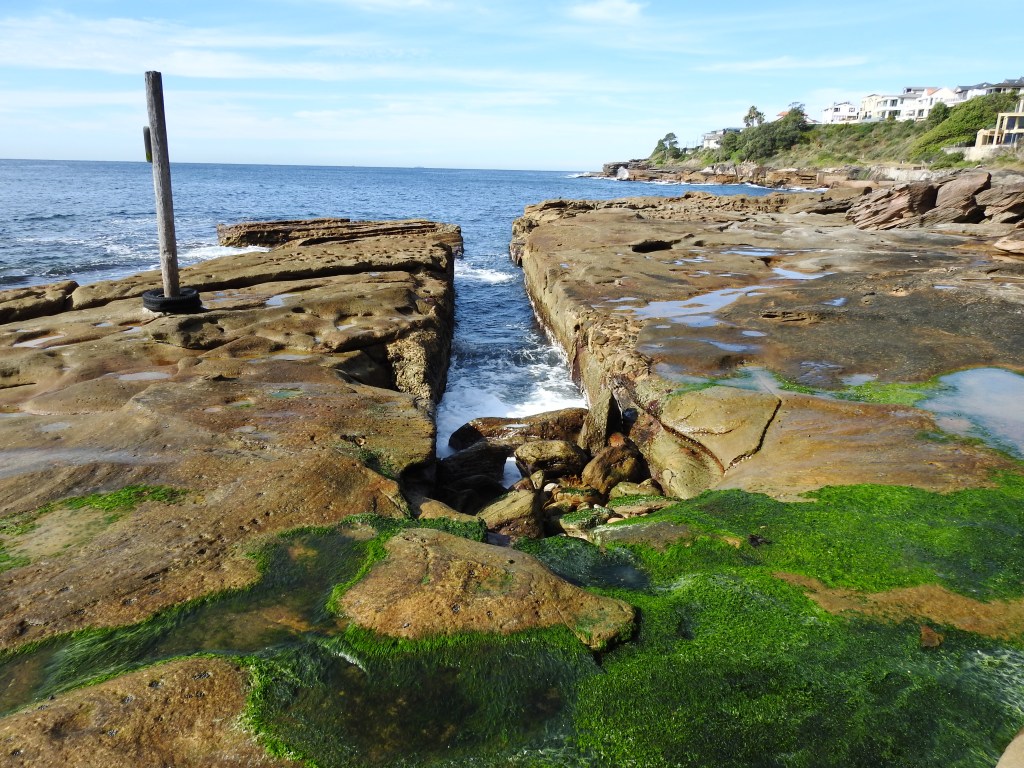
On 31 October, 1929 the Sydney Morning Herald (SMH) announced the construction of a wave powered device at Lurline Bay in Sydney. The guiding spirit behind this project was Mr P A C Bates who had already been working on the problem of making wave power available for several years by 1929. Now the plant was almost complete
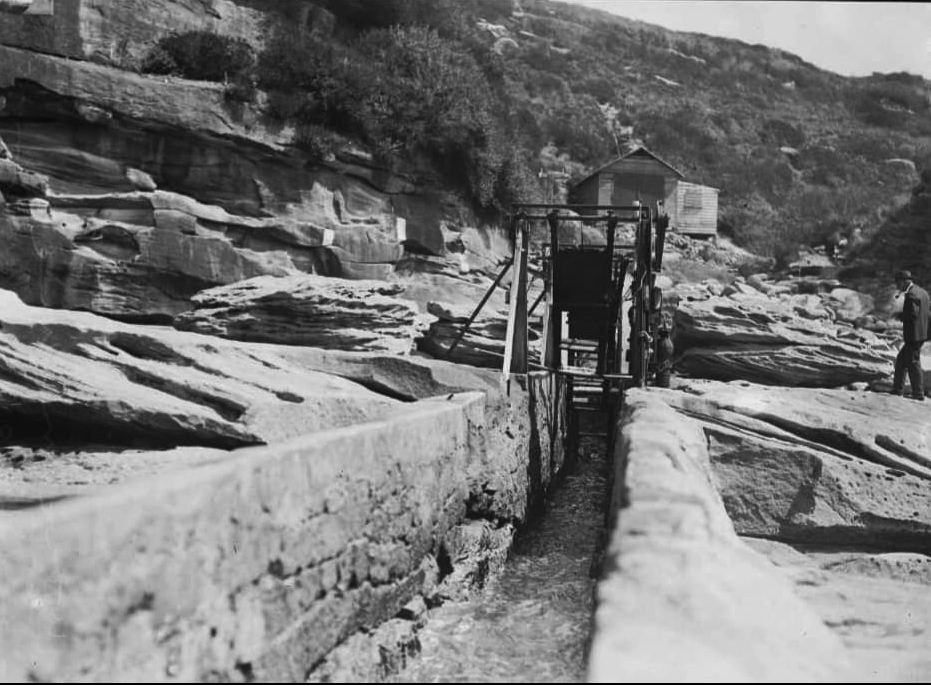
The principle adopted by Bates was strikingly simple. Waves rushed into a specially constructed channel and the surge of the water as it moved in and out operated on floats, or pontoons, designed to operate pumps that forced water at high pressure into accumulators equipped with safety valves and pressure gauges. These accumulator’s allowed a regular water pressure to drive turbines. The turbines were coupled with electric generators to produce power or light.
More technical details
Bates found out that the waves surged and recede at the rate of about 8000 times a day, and that on the calmest day their movement applied a pressure of from 500lb to 600Ib per square foot. But when a storm is on the pressure increased to 7280lb per square foot.
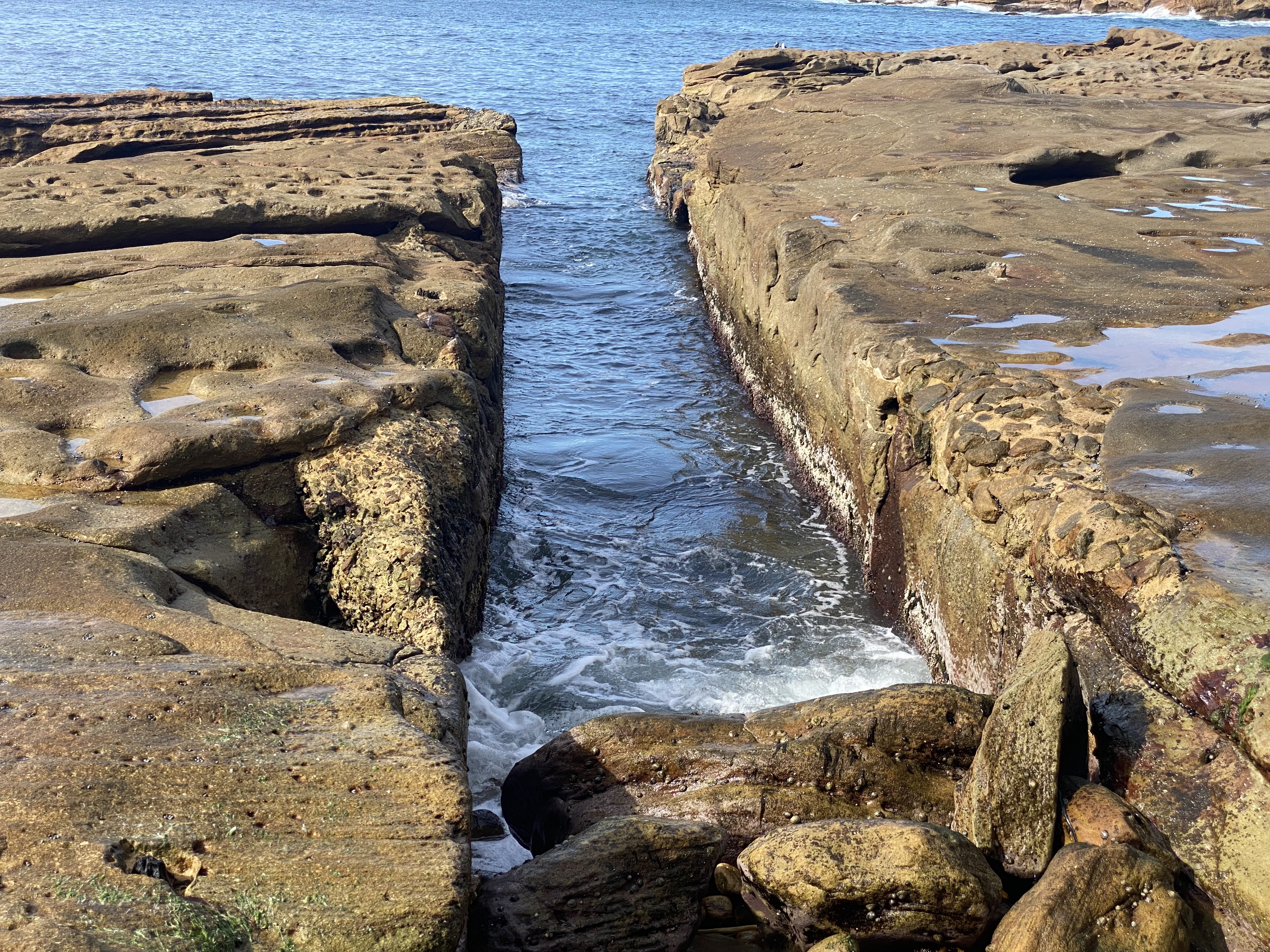
He erected a type of swinging frame in the 3ft wide channel he cut through the sandstone rock platform. This frame was geared to two hydraulic beam pumps, activated by the energy generated by the incoming and outgoing surges of water.
In turn, water was piped into the pumps and this was forced by the pistons to an airtight container where it was directed as a jet onto the vanes of a turbine, fitted with a belt drive that drove a small generator which created electricity.
The generator could produce up to 5000 watts.
See: Wave Power for a contemporary source
Visiting the site of Bates’ Generator
Today I visited the site and shot a little video
A continuous source of power
The SMH reported that, “It is claimed that results obtained from tests conducted in the calmest weather show that sufficient power can be obtained to operate the machinery continuously. One of the chief difficulties that have faced investigators of wave power has been the variable movements of the sea, and it is in overcoming this trouble that Mr. Bates claims his chief success. He points out that at his Lurline Bay plant the sea swell – which is, unlike the tidal movements, constant – has been guided into a channel with a wide flare mouth, concentrating the flow and increasing the uplift. In rough seas the mechanism is protected by a storm deflector device invented by Mr. Bates.“
Bates declared that wave-power would supply electricity to consumers at less cost than under present systems, especially when the distance from fuel supplies is great. The practical working of the invention has already, he says, been effectively proved, and its commercial practicability should become evident when the plant at Lurline Bay is completed.
Visiting the site of Bates’ Project Today
Earlier today I visited the site.
£10,000 Company to Harness the Waves for Electric Power
Though cost structure for such projects as Bates’ were different in the 1920s, a significant capitalisation was required.
The Construction and Local Government Journal Wed 24 Aug 1927, carried the following report:
Interest attaches to the recent registrationt a company, the Bates Waves Power Company. with nominal capital of £10,000 in £1shares, for the purpose of winning power from the ocean. Mr. P. A. C. Bates after experimenting for several years at Coogee, claims to have invented apparatus for harnessing the waves, and the company will purchase his invention with the object of supplying light, heat and power.
There was scepticism of course. Just as there is scepticism about other forms of renewable energy by vested interested in the carbon based economy today. The article goes on the express this doubt:
Waves do not suggest vast possibilities as producers of energy, because, like the winds, they are fickle, at one time having a gentle ebb and flow that would never break delicate electrical mechanism, and at others, developing
into a fury calculated to wreck the stoutest edifices. The winds have been harnessed successfully, however, for the purposes of small rural power plants, which have a usefulness in areas remote from the large city or country town power schemes. Production of energy from the waves is not so flexible, and being confined to the coast, even if technically successful, the problem of finding markets, would probably loom largely, especially as a private company would be operating in competition with Municipal power schemes.
Reliance is evidently placed on capacity to produce a cheaper article from free fuel.
Some of the points they made were relevant, but at this time Bates project was still largely experimental and not on an industrial power scale.
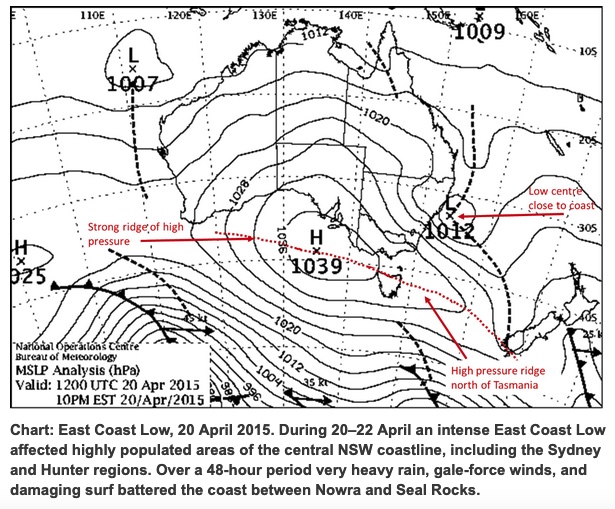
While cyclonic winds from east coast lows would have tested the small scale equipment Bates was offered a solution that was both clean and workable.
For more check this Trove search.
The Great Depression
THE BATES WAVE POWER COMPANY LIMITED.
Extraordinary Resolution.
At an Extraordinary General Meeting of The Bates Wave Power Company Limited, duly convened and held on Monday, 15th June, 1931, the following Extraordinary Resolution was duly passed:—
That it has been, proved to the satisfaction of this Meeting that the Company cannot by reason of its liabilities continue its business, and that it is advisable to wind tip the same, and accordingly that the Company be wound up voluntarily; and’ that Frank Howe Talbot, of Sydney, be appointed Liquidator for the purposes of such winding-up.
Dated at Sydney, this fifteenth day of June, 1931
Current developments
Since the publication of this post there have been several a new articles, and posts in the mainstream media, addressing the issue of title power or energy from waves and or tides
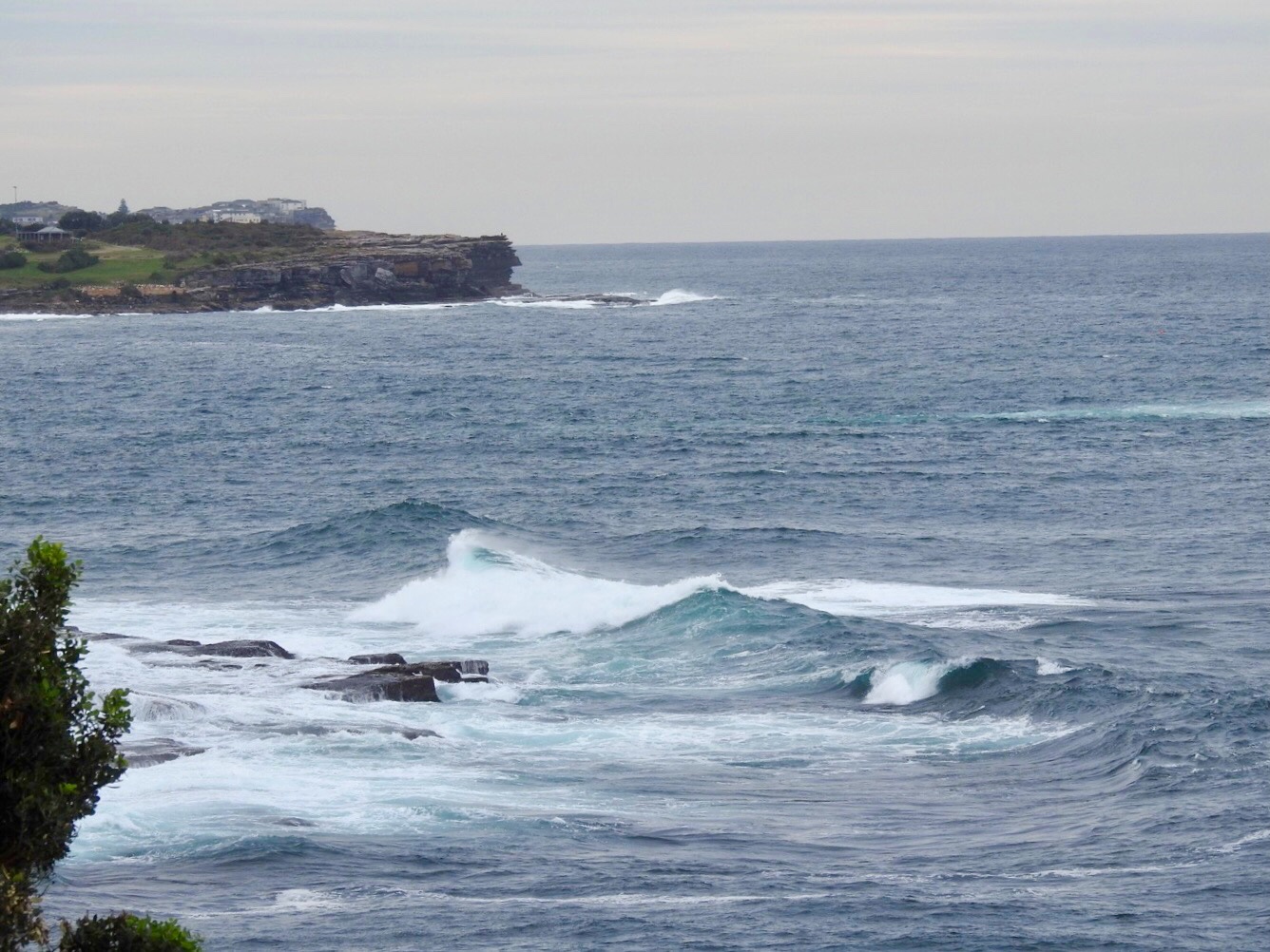
Tides ocean currents and prevailing swells carry vast amounts of energy produced by winds and the moon’s gravitational pull producing tidal variations.
- Likewise, wave energy’s environmental footprint may be lower than conventional energy sources, but large-scale deployments could disrupt marine ecosystems by changing migratory paths, animal behavior and affect wave dynamics and coastal erosion. Careful site selection and array designs could help minimize such impacts, but more research is needed as test devices are deployed. From Mongabay.


 Maximos' Blog
Leave a comment